
Introduction
Unmanned Aerial Vehicles (UAVs) have emerged as a transformative technology across numerous commercial sectors, including agriculture, infrastructure inspection, public safety, defense, and more. These applications require sophisticated camera systems capable of capturing high-quality imagery and data used for accurate analysis and decision-making. This paper examines the key technical parameters and design priorities for UAV camera technologies focused on addressing these demanding requirements. Particular attention is on intelligent cameras that can run AI models directly on-board (on the edge).
1. Camera Optics
Camera lens design significantly affects situational awareness and image fidelity. A wide Field of View (FOV) enhances coverage for reconnaissance but introduces optical distortion that must be corrected by the onboard Image Signal Processor (ISP). Defense and law enforcement UAVs often employ dual or variable FOV lenses—narrow for long-range tracking and wide for area surveillance. Advanced UAV optics balance these requirements through aspheric lens designs and digital distortion correction algorithms. Compact lenses with wide apertures (low F-numbers) improve low-light performance while maintaining size and mass constraints. Video is only as good as the line‑of‑sight (LOS) stability. Modern UAV cameras can use multiple stabilization methods; the optimal combination depends on focal length, airframe vibration spectrum, and latency budget while at the same time considering the associated costs. Mechanical gimbal stabilization, Optical Image Stabilization (OIS) and Electronic Image Stabilization (EIS) are some of the most common options, and a combination of methods may be utilized for desired effect.
2. Image Quality and Onboard Image Signal Processing (ISP)
Modern UAVs rely on the camera’s integrated ISP to handle complex image processing tasks in real time. The ISP pipeline includes numerous processing blocks such as demosaicing, noise reduction, tone mapping, and high dynamic range (HDR) fusion. By combining advanced sensor module technologies that have best-in-class sensitivity, Signal-to-Noise Ratio (SNR), and Dynamic Range (DR) together with high-performance ISPs—such as those from Ambarella SoCs—the camera can then deliver low-latency, high-fidelity imagery even under variable or challenging illumination levels. Image stabilization and motion compensation are crucial for UAVs subject to vibration and wind and must work in concert with the ISP. In some cases, global shutter sensors are preferred when the “rolling-shutter effect” of traditional sensors is an obstacle to proper performance. Additionally, adaptive exposure and color correction functions improve performance in mixed lighting environments (urban surveillance, border patrol, etc.). Moreover, when multiple sensor technology types are used, optimal integration is achieved when the ISP can process multiple pipelines in the same SoC in addition to enabling sensor fusion, as discussed in the next section.
3. Multispectral Imaging: SWIR, LWIR, and Beyond
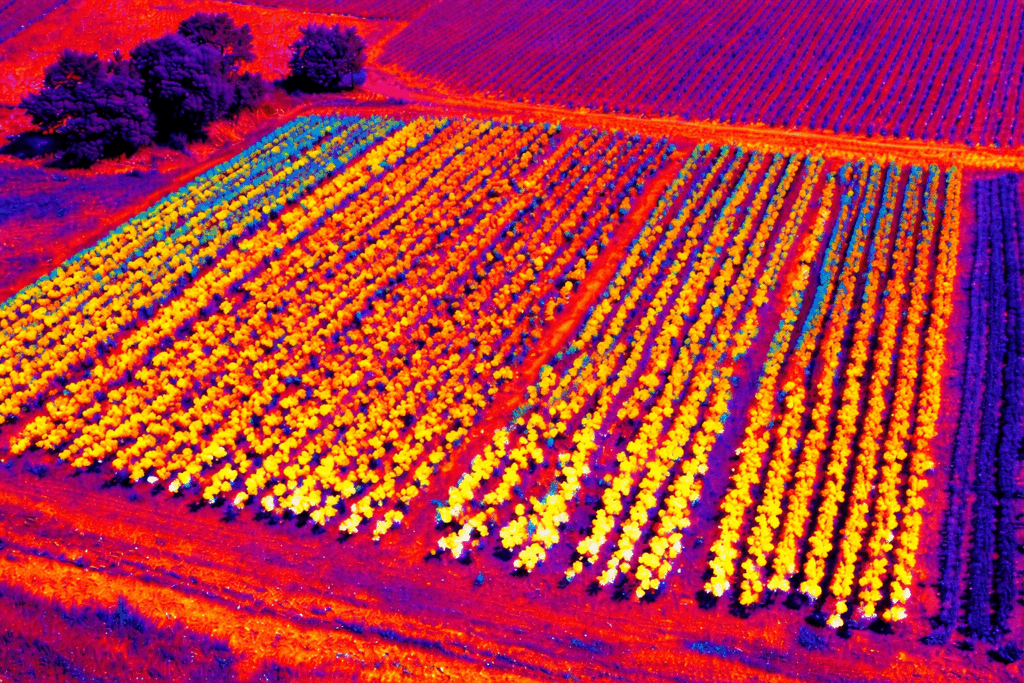
To extend vision beyond the visible spectrum, professional UAVs increasingly adopt multispectral and thermal imaging systems. Short-Wave Infrared (SWIR) sensors (0.9–2.5 µm) penetrate haze and smoke, ideal for search-and-rescue and battlefield reconnaissance, and agricultural monitoring and inspection applications. Long-Wave Infrared (LWIR) sensors (8–14 µm) detect heat signatures, enabling night operations and human or vehicle detection. Some advanced UAVs combine visible, SWIR, and LWIR modules in a tri-sensor gimbal, providing multi-domain awareness. Emerging technologies such as fused AI-based image blending enhance scene interpretation across spectral bands.
4. Compact Size, Low Mass, and Power Efficiency
For UAV applications, weight and power are mission-critical specifications that ultimately impact the battery requirements, size, flight times and range. Advanced cameras that are best-in-class typically weigh under 100 grams and consume less than 3W when fully processing video including on-the-edge AI processing. Integrated SoC solutions specialized for camera applications often have advantages over FPGA solutions in these categories. Modern SoCs with sub-10nm fabrication methods and include ARM™ processing cores, dedicated ISPs, hardware accelerators for DSPs and AI/ML processing, and advanced integrated encoders mean complete camera solutions can meet these strict requirements. Optics and sensors must also be optimized for SWaP (Size, Weight, and Power) efficiency. Low power in turn enables extended UAV endurance which is a vital factor for long surveillance missions or high-altitude reconnaissance. Alternatively, it means batteries can be smaller, leaving more available space and mass to be occupied by other payloads.
5. Onboard AI/ML and Real-Time Processing
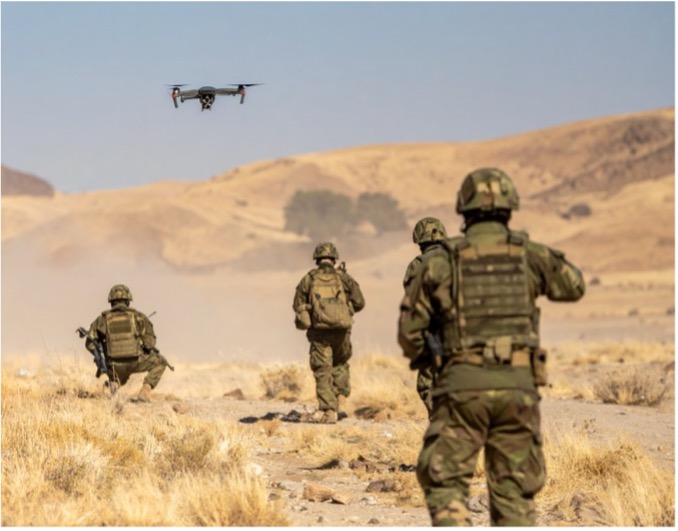
Real-time AI and machine learning (ML) capabilities are revolutionizing UAV imaging. Onboard AI processor—such as those used in the CV-series of SoCs from Ambarella—enable inference for object detection, tracking, intercept prediction, and threat classification without relying on cloud connectivity. These models feed telemetry back to the flight control system, allowing the UAV to make autonomous decisions. For example, to follow a target, avoid obstacles, or trigger alerts in law enforcement surveillance. Such autonomy enhances mission efficiency and reduces operator workload. These advanced SoCs, with ever-increasing ML algorithm processing power, remove the need to have external or add-on GPUs or NPUs. Newer SoCs can also enable integration of Multimodal machine learning models to shift from visual detection using traditional CNN’s to intelligent scene understanding utilizing Video Language Models (VLMs). This is a rapidly evolving space which means adopting a future-proof platform is essential. Traditional systems that utilize FPGAs or processing without hardware accelerated cores that can process AI are quickly falling behind or become overly complex, bulky, and inefficient when trying to integrate AI processing into the system.
6. Low-Latency Video Streaming and Encoding
Low-latency video transmission is essential for first-person-view (FPV) UAVs and tactical operations requiring instant feedback. Modern systems leverage H.264 (AVC) and H.265 (HEVC) codecs with tunable encoding parameters to optimize between bitrate, latency, and image quality. HEVC provides up to 50% bitrate savings at equivalent quality when compared to H.264, extending transmission range over limited bandwidth links. Digital compression control, including intra-frame refresh and adaptive quantization, ensures video integrity during rapid scene changes—critical for dynamic tracking or interception. Hardware integrated encoders in advanced camera SoCs are a key advantage to best-in-class encoding performance. These SoCs also can support customization of the encoding pipelines to further enhance performance. For example, further intelligence can be added to encoding algorithms to accomplish features such as more effective dynamic control of bit rates and active scaling to ensure limited bandwidth transmission paths are optimally used.
7. Security and Firmware Integrity
In defense, government/infrastructure, and law enforcement applications, cybersecurity is as important as image clarity and processing. Cameras and their firmware must be immune to tampering and unauthorized access. Secure boot mechanisms, signed firmware updates, and hardware encryption modules protect against data breaches or system hijacking. Additionally, encrypted video streams using AES-256 or TLS-secured RTP ensure confidentiality across wireless channels. End-to-End encryption from camera front-end to delivered video stream is a critical requirement. Compliance with ITAR, EAR, and other regulatory frameworks is also vital for system deployment in sensitive environments. Control of source code, hardware designs,and Intellectual Property are typically stringently regulated as well.
8. Environmental Robustness
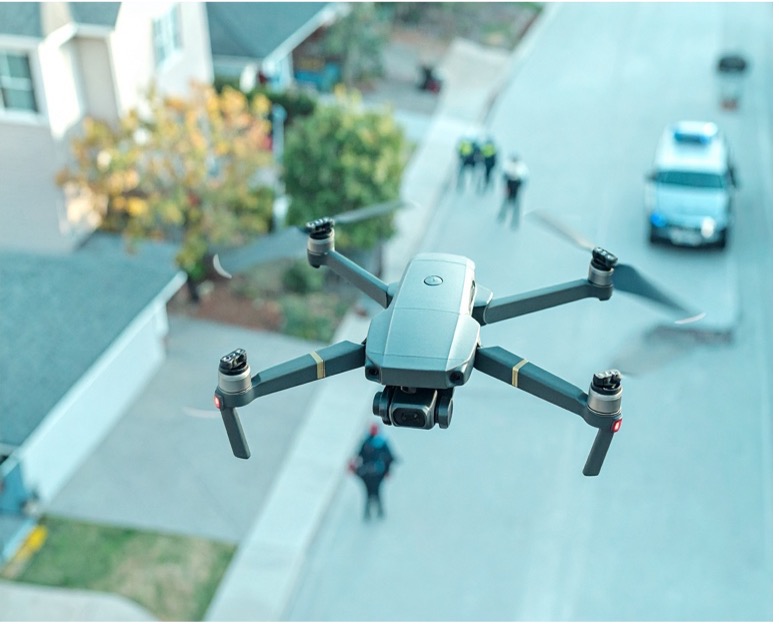
UAVs operate across diverse and often extreme environments, from hot and arid deserts to cold arctic conditions. Camera systems must be ruggedized to withstand vibration, temperature fluctuations, moisture, and dust. IP-rated housings, conformal coatings, and wide operating temperature ranges (-40°C to +85°C) ensure reliability. In defense scenarios, electromagnetic shielding can be considered to mitigate interference from radar or communication equipment. Industrial grade components that can operate within or beyond this temperature range are often a requirement, ruling out standard consumer-grade component solutions. Camera and UAV systems must undergo environmental design testing regimes that validate performance before deploying them in the field. Gimbals that include stabilization can often be the weakest link in environmental robustness so they must be carefully selected to match operating conditions.
9. Integration with Flight Control Systems
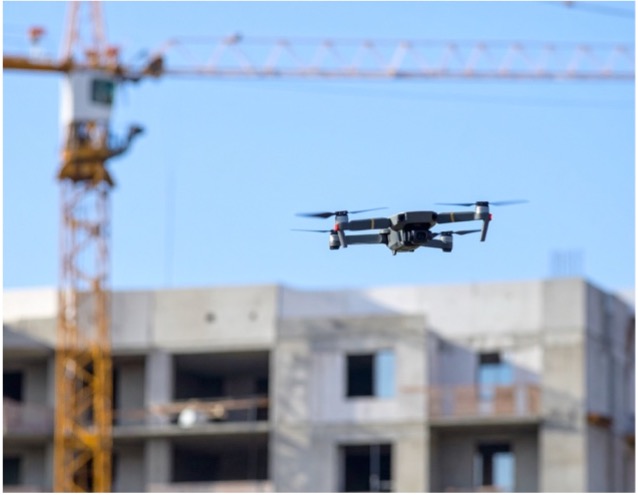
The synergy between camera and flight control systems enhances UAV functionality. AI-driven object detection, collision prediction, and environment mapping provide real-time inputs to the UAV’s autopilot. For example, when tracking a moving vehicle, camera-derived metrics such as bounding box data and velocity vectors can influence gimbal stabilization or course correction. Integration through APIs or middleware enables seamless communication between the vision and navigation subsystems. Camera sub-systems must integrate flight control on-board the SoC or provide robust links between the flight controller to the camera. Latency between camera AI data and the flight control must be minimal for a robust and accurate response to the incoming data. If the flight control is by First Person Viewer (FPV) then this becomes even more demanding since the video pipeline to the end-user includes more functional blocks (such as the wireless transmission), adding to latency.
10. Comprehensive SDKs and Customization Tools
Offering robust SDKs enables developers to easily customize camera systems for specific applications, streamline integration processes, and accelerate development cycles, thus reducing overall time-to-market. SoC-based camera systems should offer an ecosystem to support a platform-approach which improves integrity, efficiency of moving to next-generation designs, scalability, and robustness, to name a few advantages. Modularizing camera designs facilitates tailored solutions that scale effortlessly from prototypes to large-scale deployments, addressing unique operational requirements and enabling flexible adaptation to evolving mission profiles.
Conclusion
Advanced UAV camera systems represent a convergence of cutting‑edge optics, powerful onboard processing, AI-driven analytics, secure firmware architectures, and ruggedized design. As UAV applications in commercial, industrial, and defense sectors continue to expand, the demand for high-performance imaging systems will accelerate. The integration of multi-spectral sensing, low-latency encoding, and real-time on-camera AI capabilities will enable UAVs to operate with greater autonomy, reliability, and mission effectiveness. Future advancements in sensor technology, SoC efficiency, and embedded AI will further enhance UAV capabilities, solidifying their role as indispensable tools across critical sectors.